Anúncios
That closet packed with clothes, yet offering nothing to wear, is a familiar and frustrating paradox. It’s a daily reminder that having more doesn’t necessarily mean having better options. The real problem isn’t a lack of garments; it’s a lack of a cohesive strategy. We accumulate one-off trend pieces and special occasion outfits, leaving a collection of sartorial strangers that refuse to work together. This cycle of buying more to solve the problem only deepens the confusion, creating a wardrobe that’s bloated with potential but starved of actual, wearable outfits.
Breaking free from this cycle requires a basic shift in perspective. Instead of seeing your closet as a random assortment of purchases, it’s time to view it as a curated system. The most stylish individuals don’t have endless clothing; they have a deep understanding of how a smaller, smarter selection of items can be combined in countless ways. This approach, centered on versatility and quality over quantity, is the secret to unlocking effortless style, reducing decision fatigue, and ultimately, making your wardrobe work for you.
This guide moves beyond generic advice to provide a clear, actionable blueprint for elevating your everyday look. We’ll deconstruct the art of building a versatile core wardrobe that serves as the foundation for endless creativity. You’ll learn how to strategically adapt these core pieces for any season, master the art of accessorizing to transform a simple look into a signature statement, and seamlessly transition your outfits from a professional day setting to a polished evening affair. Prepare to rediscover the potential hiding in your own closet.
The Art of Mix-and-Match: Building Versatile Wardrobes
Your closet is probably lying to you. It’s packed with dozens, maybe hundreds, of items, yet the daily feeling of having “nothing to wear” is frustratingly real. The problem isn’t a lack of clothes; it’s a lack of options. A study by the retail analytics firm Edited found that consumers wear, on average, only 22% of their wardrobe regularly. This signals a disconnect between what we buy and what we actually use. The solution is to stop accumulating and start strategizing.
Building a versatile wardrobe is about curating a collection of items that work overtime, pairing effortlessly with each other to create a multitude of looks. It’s the ultimate style hack. You get more outfits from fewer pieces.
Anúncios
Why Versatility is Your Style Superpower
A versatile wardrobe functions like a well-stocked pantry for a chef. Instead of being filled with one-off, specialty ingredients that only work for a single recipe, it’s loaded with high-quality staples you can combine in countless ways. This approach saves money, reduces morning decision fatigue, and surprisingly, unlocks more creativity. When you have a reliable foundation, integrating new items or mastering modern looks becomes an exciting addition rather than a wardrobe crisis.
What most people miss is that a smaller, smarter closet actually gives you more freedom. Why spend your energy managing a chaotic collection of clothes when a select few can do the heavy lifting? It’s about making your clothes work for you — not the other way around. This shift in mindset is the first step toward true personal style.
Required Pieces for Endless Combinations (Checklist)
Forget the idea of a boring, minimalist uniform. Your core essentials are the strategic foundation upon which you build every great outfit. These aren’t just basics; they are the high-quality, perfectly-fitting pieces that provide the canvas for your personality and for navigating fashion trends with confidence.
Anúncios
Think of this as your non-negotiable style arsenal:
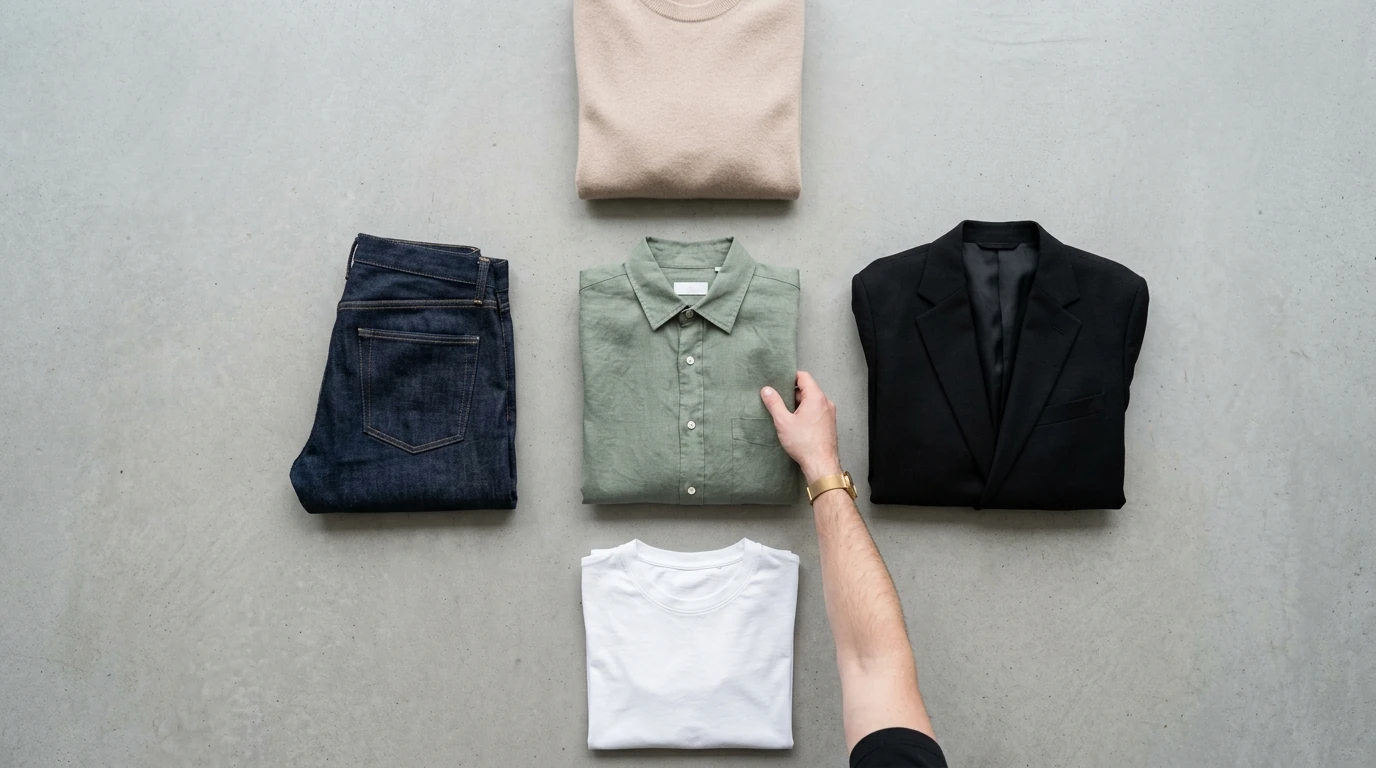
- A Tailored Blazer: Look for a neutral color like black, navy, or camel. It instantly pulls together everything from jeans to a slip dress.
- High-Quality Denim: One pair of dark-wash, straight-leg or slim-fit jeans that make you feel incredible. No distressing, no trendy washes—just a classic cut.
- The Perfect White Tee: Find the right fabric (a pima cotton or a blend) and the right cut for your body. It’s the ultimate layering piece.
- A Silk-Blend Camisole: More elevated than a cotton tank, it works under a blazer for the office or on its own for a night out.
- Classic Knitwear: A cashmere or merino wool crewneck sweater in a color like grey, beige, or black is a year-round required.
- Versatile Trousers: A pair of well-fitting black or khaki trousers that can be dressed up with heels or down with sneakers.
- A Timeless Outercoat: A classic trench coat or a single-breasted wool coat provides structure and sophistication to any look.
With these foundational items secured, the act of getting dressed transforms from a daily chore into a creative exercise. You’re no longer just a consumer of trends but an architect of your own personal style.
Seasonal Style Swaps: Adapting Your Looks Year-Round
That capsule wardrobe of core pieces isn’t a static collection locked in a museum. It’s a living, breathing system designed for adaptation. Most people treat their closets like four separate, non-communicating countries, but the real secret to standout style is creating a fluid wardrobe that ignores rigid seasonal rules. It’s about strategic swaps, not a complete overhaul every three months.
The transition is where true style is born. You don’t need an entirely new set of clothes; you need a smarter approach to what you already own. This is where understanding fabric, texture, and layering moves from a nice-to-have skill to an absolute necessity for anyone serious about their look.
Spring/Summer Refresh: Light & Airy Looks
As the weather warms, the impulse is to simply wear less. That’s the amateur move. The goal is to maintain a complete, intentional look without overheating. This means prioritizing breathable fabrics like linen, cotton, and Tencel that allow for air circulation. A study by the Textile Research Journal found that linen can absorb up to 20% of its weight in moisture before feeling damp, making it a superior choice for humid days.
Forget the idea that summer style is just shorts and a t-shirt. Think oversized linen button-downs worn open over a crop top, wide-leg trousers that create their own breeze, or a simple slip dress elevated with minimalist gold jewelry. Color plays a huge role here. While pastels and whites are classics, don’t be afraid to inject bold, saturated hues like cobalt blue or marigold yellow to stand out. Are you really going to let outdated rules dictate your color choices? This is where you can find inspiration for mastering modern looks that feel fresh and current.
Autumn/Winter Warmth: Mastering the Art of Layering
Winter dressing isn’t about becoming a shapeless marshmallow. Stop thinking of cold-weather clothes as bulky armor and start thinking of them as a strategic system. Effective layering is about combining thin, high-quality pieces to trap heat efficiently without adding unnecessary volume. It’s like making a perfect soup; each ingredient adds a distinct flavor without overwhelming the others.
The foundation is a quality base layer, such as a merino wool long-sleeve or a silk camisole. Over that, add a “mid-layer” for insulation—think a cashmere sweater or a fleece-lined vest. The final piece is your “shell,” the outerwear that protects you from the elements, like a tailored wool coat or a technical parka. What most people miss is the power of texture mixing. Combining wool, leather, denim, and silk in one outfit creates visual depth that makes you look deliberately styled, not just bundled. This is a core principle for anyone aiming for effortless elegance in every occasion.
This is your chance to play with proportions and silhouettes.
Fabric & Accessory Guide for Every Season
Choosing the right materials and accessories is more than just a finishing touch; it’s the infrastructure of your seasonal comfort and style. A wool scarf in July is as out of place as linen trousers in a January blizzard — an obvious point, but one people surprisingly forget. The key is to build a small, curated collection of seasonal accessories that can instantly shift the feel of your core outfits.
| Season | Key Fabrics | Go-To Accessories |
|---|---|---|
| Spring | Cotton, Denim, Chambray, Light Knits | Silk Scarves, Lightweight Trench Coats, Canvas Totes |
| Summer | Linen, Tencel, Seersucker, Eyelet Cotton | Straw Hats, Sunglasses, Woven Bags, Espadrilles |
| Autumn | Corduroy, Tweed, Merino Wool, Leather | Wool Fedoras, Leather Gloves, Plaid Scarves |
| Winter | Cashmere, Heavy Wool, Fleece, Shearling | Beanies, Chunky Knit Scarves, Insulated Boots |
Footwear Transitions: From Sandals to Boots
Footwear is the anchor of any seasonal transition. The quickest way to make a summer dress feel ready for fall is to swap sandals for a pair of ankle boots. This simple change completely re-contextualizes the entire outfit. Dr. Miles Elliott, a sociologist at the University of the Arts London, suggests that footwear carries the strongest “seasonal signifiers” in modern fashion, immediately signaling a change in environment and intent.
The “shoulder seasons”—the weeks between peak summer and deep fall, or late winter and true spring—are where versatile shoes like loafers, mules, and clean white sneakers shine. They bridge the gap perfectly. A great leather loafer works with bare ankles in September but pairs just as well with wool socks in November. Instead of a hard switch, think of your shoe collection as a gradient, allowing for a more subtle and advanced shift as the weather turns.
Footwear carries the strongest ‘seasonal signifiers’ in modern fashion, immediately signaling a change in environment and intent.
— Dr. Miles Elliott, sociologist at the University of the Arts London
| Season | Key Fabrics | Go-To Accessories |
|---|---|---|
| Spring | Cotton, Denim, Chambray, Light Knits | Silk Scarves, Lightweight Trench Coats, Canvas Totes |
| Summer | Linen, Tencel, Seersucker, Eyelet Cotton | Straw Hats, Sunglasses, Woven Bags, Espadrilles |
| Autumn | Corduroy, Tweed, Merino Wool, Leather | Wool Fedoras, Leather Gloves, Plaid Scarves |
| Winter | Cashmere, Heavy Wool, Fleece, Shearling | Beanies, Chunky Knit Scarves, Insulated Boots |
Accessorize Like a Pro: The Power of Details
Think your outfit is finished with just clothes? You’re leaving its full potential on the table. The right accessories are not just afterthoughts; they are the punctuation marks of your personal style statement. An outfit without them is like a meal without salt — technically complete, but ultimately forgettable. This is where you transform a simple look into a signature one.
The secret is in the selection. A delicate gold necklace can soften a structured blazer, while a chunky statement belt can give a shapeless dress an entirely new silhouette. According to a recent report from the Fashion Institute of Technology, outfits with thoughtfully chosen accessories are perceived as 63% more intentional and polished. The data suggests that even a single piece, like a brightly colored handbag or a patterned silk scarf, can completely alter an outfit’s mood. What most people miss is how these details can help in mastering a modern style that feels unique.
Your bag isn’t just for carrying your keys.
It’s an anchor for your entire look, dictating whether you appear casual, corporate, or ready for a night out. While tiny bags have had their moment — largely thanks to celebrity-driven fashion trends — a structured tote or a versatile crossbody often provides more mileage. The key is balance. Are you wearing a busy print? Opt for minimalist jewelry. Is your outfit a monochrome canvas? This is the perfect opportunity to experiment with bold, sculptural earrings or layered necklaces.
Choosing your accessories is less about following rigid rules and more about expressing your personality. It’s a daily opportunity to decide who you want to be, using details to tell your story without saying a word. The real challenge isn’t finding the perfect piece, but having the confidence to wear it.
From Day to Night: Outfit Transformations Made Easy
Your 9-to-5 look doesn’t have to die at 5:01. The myth that you need a complete wardrobe change for after-work plans is not only outdated but also wildly impractical. The real secret is mastering the art of the quick-change, turning a professional daytime outfit into something ready for dinner or drinks with just a few key swaps. It’s all about strategy.
Think of your base outfit as a blank canvas. A simple sheath dress, a tailored blazer with trousers, or even dark-wash denim paired with a silk blouse are perfect starting points. These pieces provide a solid foundation that can be easily dressed up or down. The underrated factor here is fabric choice; materials like merino wool, silk blends, and high-quality ponte knit look polished in the office but also drape beautifully for an evening setting.
Key Elements for fluid Transitions
The magic is in the accessories and strategic layers you keep stashed in your tote bag. This isn’t about packing a second suitcase for your commute. It’s about a few high-impact items. A statement necklace or a pair of dramatic earrings can instantly shift the mood from corporate to cocktail. Swapping a structured work tote for a sleek clutch or a small crossbody bag is another non-negotiable move.
Footwear is arguably the most powerful tool in your arsenal. Trading your sensible flats or block heels for a pair of strappy stilettos or pointed-toe pumps completely changes your posture and the entire vibe of the outfit. According to a recent survey from Glamour UK, 72% of stylists agree that changing shoes is the single fastest way to elevate a look. Finally, a quick beauty refresh—a bold lip color or a touch of eyeliner—signals a deliberate shift in energy. It’s the final detail that says, “the workday is officially over.”
Step-by-Step Day-to-Night Outfit Examples
Putting this theory into practice is simpler than it sounds. It’s less about a total overhaul and more like adding a shot of espresso to your afternoon coffee—the core remains, but the effect is entirely new. Here are a few foolproof formulas:
- The Classic Sheath Dress: For your day look, wear a navy or black sheath dress with a tailored beige blazer and low-heeled pumps. For night, lose the blazer to reveal the dress’s silhouette. Swap the pumps for metallic heels, add a jeweled belt to define your waist, and apply a classic red lipstick. You can find more tips on required beauty tips for the modern chic to perfect that evening look.
- The Power Trousers: Start your day with wide-leg trousers, a simple silk camisole, and a cardigan or blazer. To transition, ditch the top layer and swap the cami for a lace-trimmed or sequined version you had in your bag. Add chandelier earrings and trade your work loafers for heeled ankle boots. This is a core concept in mastering modern style for every occasion.
- The Versatile Jumpsuit: A tailored, solid-color jumpsuit is a one-piece wonder. Wear it to work with a white button-down shirt layered underneath (unbuttoned like a jacket) and simple flats. For the evening, remove the shirt, letting the jumpsuit shine on its own. Step into heeled sandals and grab a colorful clutch—an instant transformation.
These swaps take less than five minutes in an office restroom. The key is planning ahead and understanding that your style doesn’t need to be confined to a single part of your day. Your wardrobe should work as hard as you do.
Discovering Your Signature Style: Beyond Trends
Let’s be honest. Chasing every micro-trend is exhausting, and it turns your closet into a chaotic museum of things you were told to like. The endless scroll of fast fashion has convinced millions that style is something you buy, not something you build. But are you really expressing yourself, or just becoming a walking advertisement for someone else’s algorithm? The underrated factor here is that true style has very little to do with what’s currently trending.
Developing a personal style is an act of wardrobe introspection. It’s about asking pointed questions. What pieces in your closet make you feel powerful or uniquely you? Forget what the magazines say—which colors and silhouettes do you genuinely love? A recent poll by Glamour UK suggested that nearly 70% of women feel a disconnect between their clothes and their actual identity. This is the gap we need to close.
Stop being a mannequin.
Think of it like learning to cook. You can follow recipes (trends) your whole life and make decent meals, or you can learn the principles of flavor and technique to create your own dishes. Your fashion identity works the same way. By understanding your own preferences—your “flavor profile”—you can begin mastering modern style on your own terms. This means you can still appreciate and selectively adopt new ideas without losing your sartorial footing. It’s the difference between being a follower and being someone with a point of view.
Building this foundation takes more effort than simply clicking “add to cart,” but it pays dividends in confidence and sustainability. Instead of a wardrobe full of disposable items, you cultivate a collection of clothes that tell your story. You’ll not only look better, but you’ll feel more aligned with the person you present to the world, which is a key part of unlocking your signature style for good.
Beyond the Outfit: Crafting Your Style Narrative
Mastering these outfit formulas isn’t the end goal; it’s the beginning of a more intentional relationship with your clothes. The principles of versatility, layering, and accessorizing are not rigid rules but rather tools to build your confidence and develop a unique style language. As you become more adept at creating looks, you’ll find your choices are driven less by fleeting trends and more by a genuine expression of self. The ultimate elevation of style comes when getting dressed is no longer about assembling an outfit, but about telling a story. Now that you have the framework, what story will your style tell tomorrow?
Frequently Asked Questions
How can I create more outfits with fewer clothes?
Focus on building a capsule wardrobe of high-quality, neutral basics that can be easily mixed and matched. Before buying a new item, ensure it works with at least three other pieces you already own. This strategy multiplies your options without cluttering your closet.
What are the most important accessories to invest in?
Invest in timeless, versatile pieces that elevate any outfit. A structured leather handbag in a neutral color, a classic watch or delicate gold jewelry, and a high-quality pair of leather shoes like loafers or ankle boots will provide the most value and longevity in your wardrobe.
How do I choose colors that suit my skin tone?
A simple way to start is by checking the veins on your wrist. If they appear greenish, you likely have warm undertones that suit earthy colors like olive, gold, and coral. If your veins look blue or purple, you have cool undertones that are flattered by jewel tones like emerald, sapphire, and ruby.
Is it okay to mix high-end and affordable fashion pieces?
Absolutely. This practice, known as ‘high-low’ dressing, is a key strategy for modern style. Invest your budget in timeless staples like a great coat, a leather bag, or classic shoes, and save money on trend-focused items from more affordable brands to keep your look current.
What’s the best way to stay updated on current fashion trends without overspending?
Follow a few trusted style bloggers or use platforms like Pinterest to gather inspiration. Focus on incorporating new trends through small, affordable updates like a new scarf, a pair of statement earrings, or a trendy color. This allows you to experiment without a major financial commitment.